The Journal
Category: Poetry & Story
Old English poetry was made to be heard: spoken in halls, copied in monasteries, and carried across generations before surviving in a handful of manuscripts. Its poems move between heroic action and inward reflection, asking what courage, loyalty, exile, faith and memory mean when certainty falls away.
This collection offers accessible close readings of Beowulf, The Seafarer, The Battle of Maldon and the Exeter Book riddles. Each essay places the work in its historical and literary setting while showing why its language and ideas still matter.
Start here
- Into the Mere: Why Does Beowulf Fight Grendel’s Mother?
- The Battle of Maldon: Courage, Pride and the Will to Endure
- The Seafarer: Comfort, Solitude and Purpose
Explore related topics
Poetry & Story
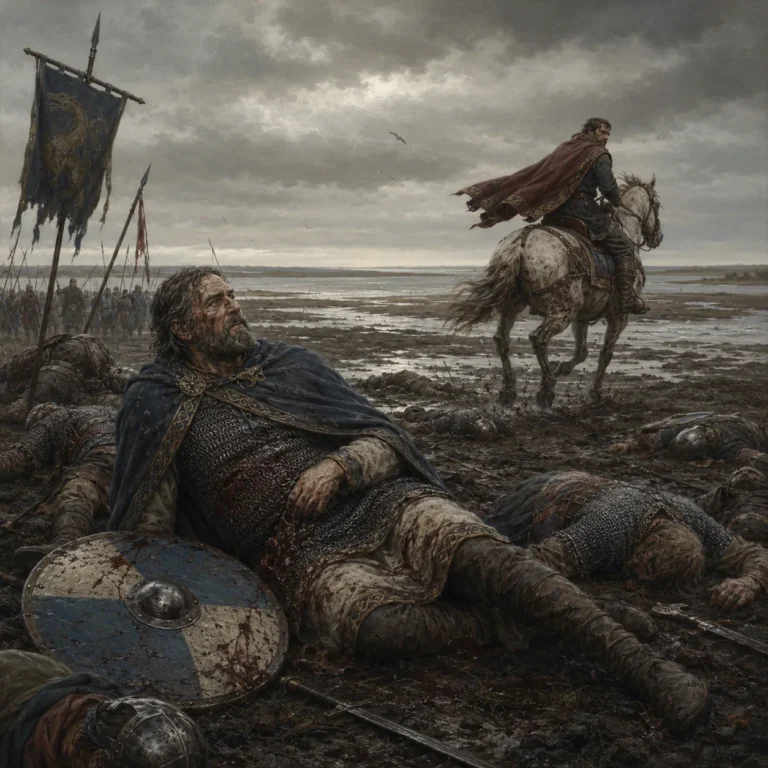
The Battle of Maldon: Courage, Pride and the Will to Endure
Explore The Battle of Maldon, Byrhtnoth's ofermod and Byrhtwold's famous speech in this guide to courage, pride and Anglo-Saxon loyalty.
Poetry & Story
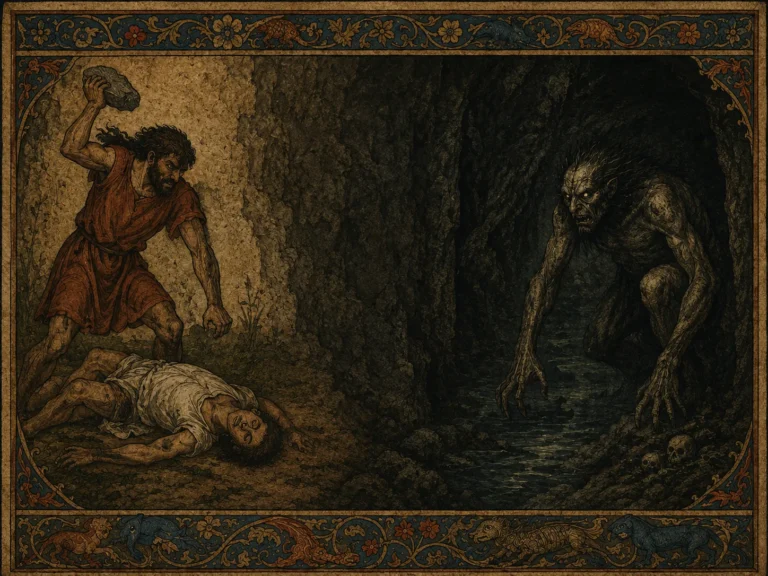
Grendel and the Kin of Cain: Beowulf’s Monster Genealogy
Why does Beowulf trace Grendel’s ancestry to Cain? Biblical history, the Flood and a giant-made sword reveal a monster shaped by violence, exile and broken kinship.
Riddles
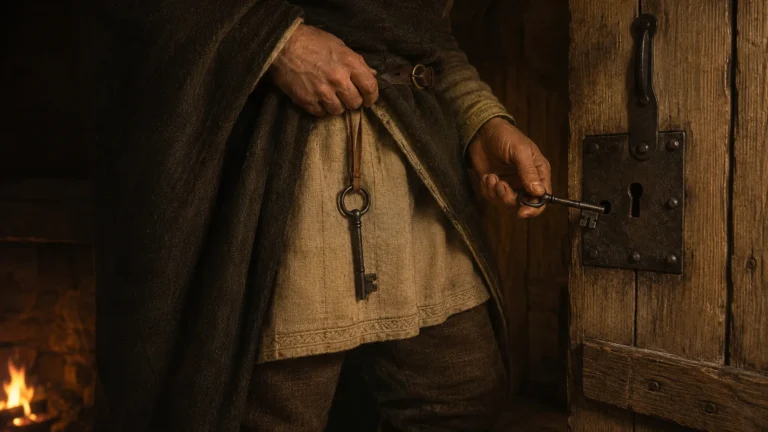
The Key at a Man’s Thigh: Exeter Book Riddle 44
A familiar object becomes a suggestive puzzle in Exeter Book Riddle 44. Read the Old English, weigh the clues and explore its playful double meaning.
Poetry & Story
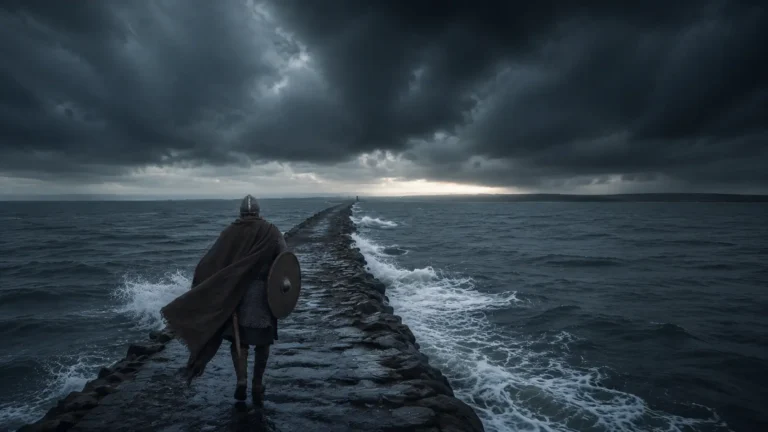
The Enduring Legacy of Old English Literature
Surviving poems, familiar words and new archaeological finds keep early medieval England close. Explore why Old English literature continues to capture the modern imagination.
Poetry & Story11 min read
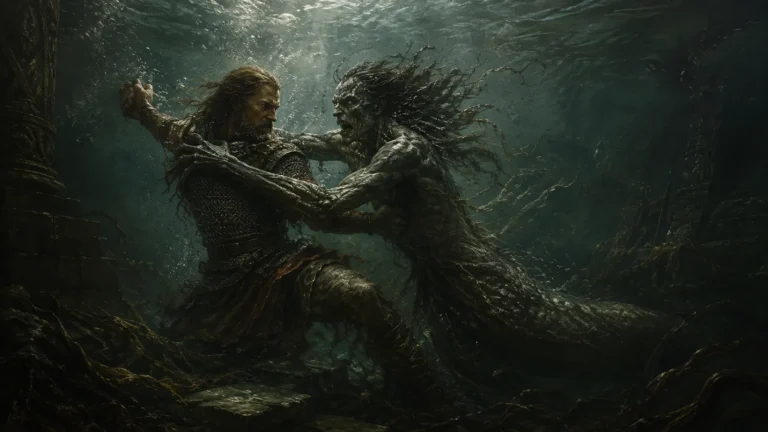
Into the Mere: Why Does Beowulf Fight Grendel’s Mother?
The mere is not just a lake. It is every dark water we refuse to look into. A close reading of the poem’s most unsettling passage and why it still works on us, thirteen centuries on.

Poetry & Story8 min read
The Seafarer Lessons for Modern Men: Comfort, Solitude, and Purpose
Discover The Seafarer lessons for modern men: how an Anglo‑Saxon poem speaks to comfort, solitude, transience, and purpose in today's distracted world.
Riddles5 min read
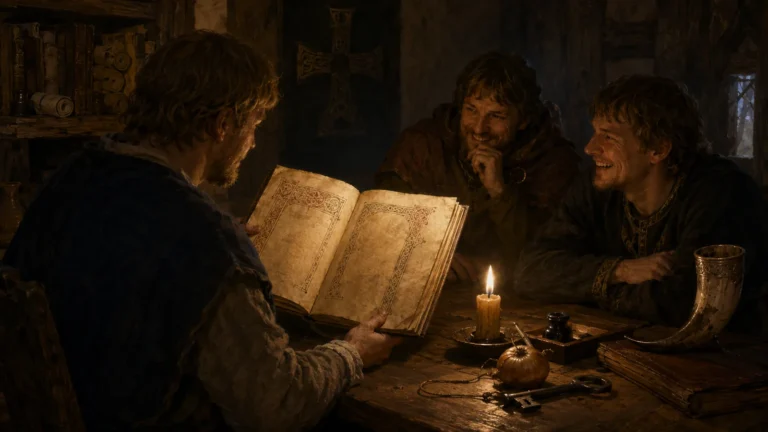
The Exeter Book Riddles: What Anglo-Saxons Found Funny
Onions, storms, dough, a one-eyed seller of garlic — the riddle-poems that prove the Anglo-Saxons had a sense of humour.